
When packing a product set into a gift box, it’s best to designate separate spaces for the main item, accessories, and instruction manual. Blister inserts can be arranged to accommodate different shapes, making the assembly sequence clearer once the box is opened. The illustration here shows a general structural layout; specific slots should be designed according to the actual product.
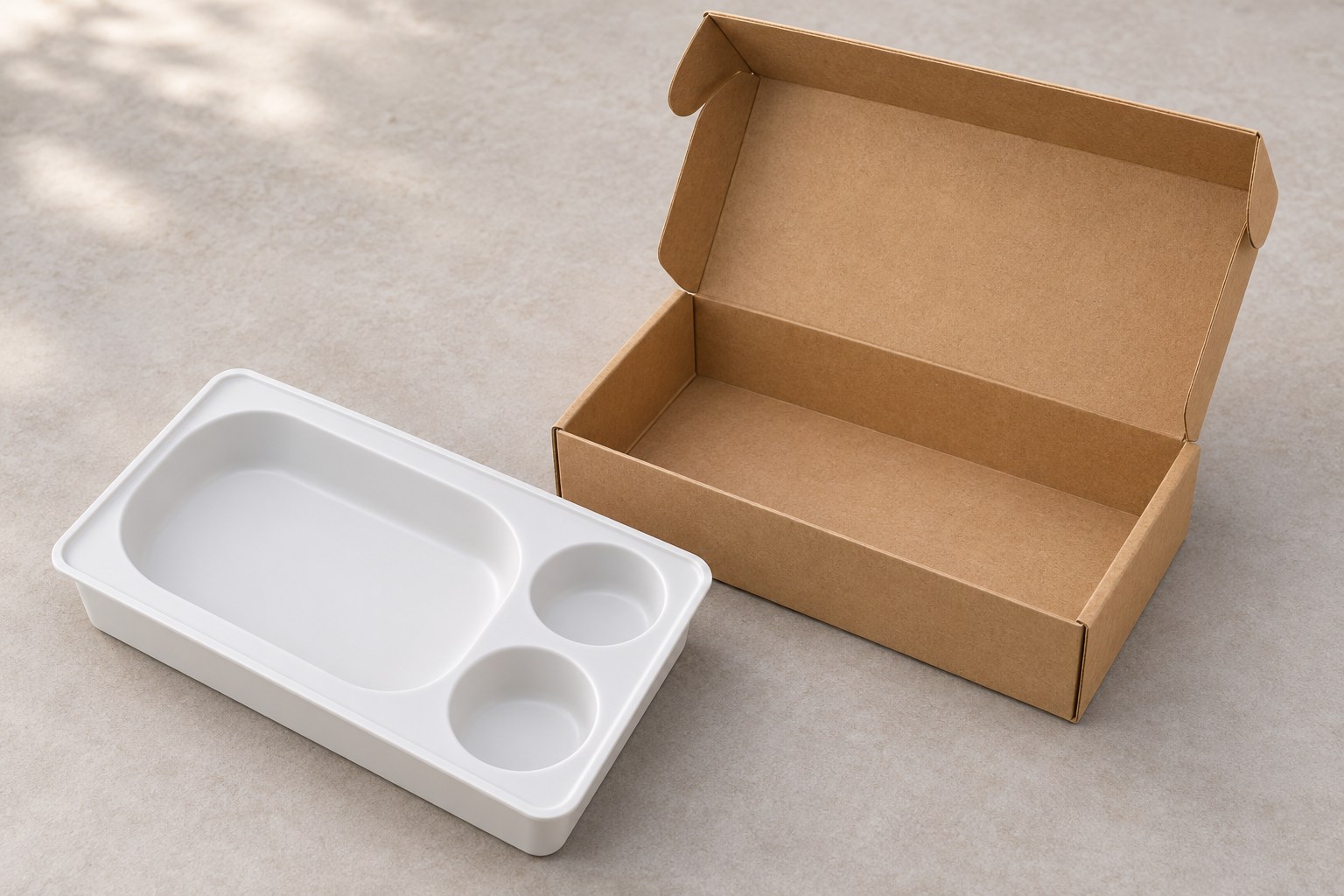
First check the box, then check the tray.
The outer dimensions of the inner box should match the interior space of the gift box, while allowing for some leeway during assembly and removal. Providing only the outer dimensions of the box can lead to errors; we recommend also providing the finished box, a product sample, and a list of accessories.
Leave room for natural movement at the entry and exit points.
Round components, slender main parts, and paper inserts are handled differently. During the prototyping phase, check the finger placement, groove depth, and support points, and also verify that the lid does not press against the product when closed.
What Kind of Recommendations Are Suitable?
Packaging companies currently producing gift sets, electronic accessory bundles, or those needing to replace original inner trays should contact Xu Farren. Describing the issues with the original packaging—such as difficulty in removing items, loose fit, or mixed-up accessories—is more helpful in determining a solution than simply asking for “a more upscale design.”
Understanding the Interface Between Members and Business Operations
Xu Faren's Member Profile and Related Content. If you would like a recommendation, please provide details about the product, its intended use, and any existing documentation so we can determine if it’s a good fit.